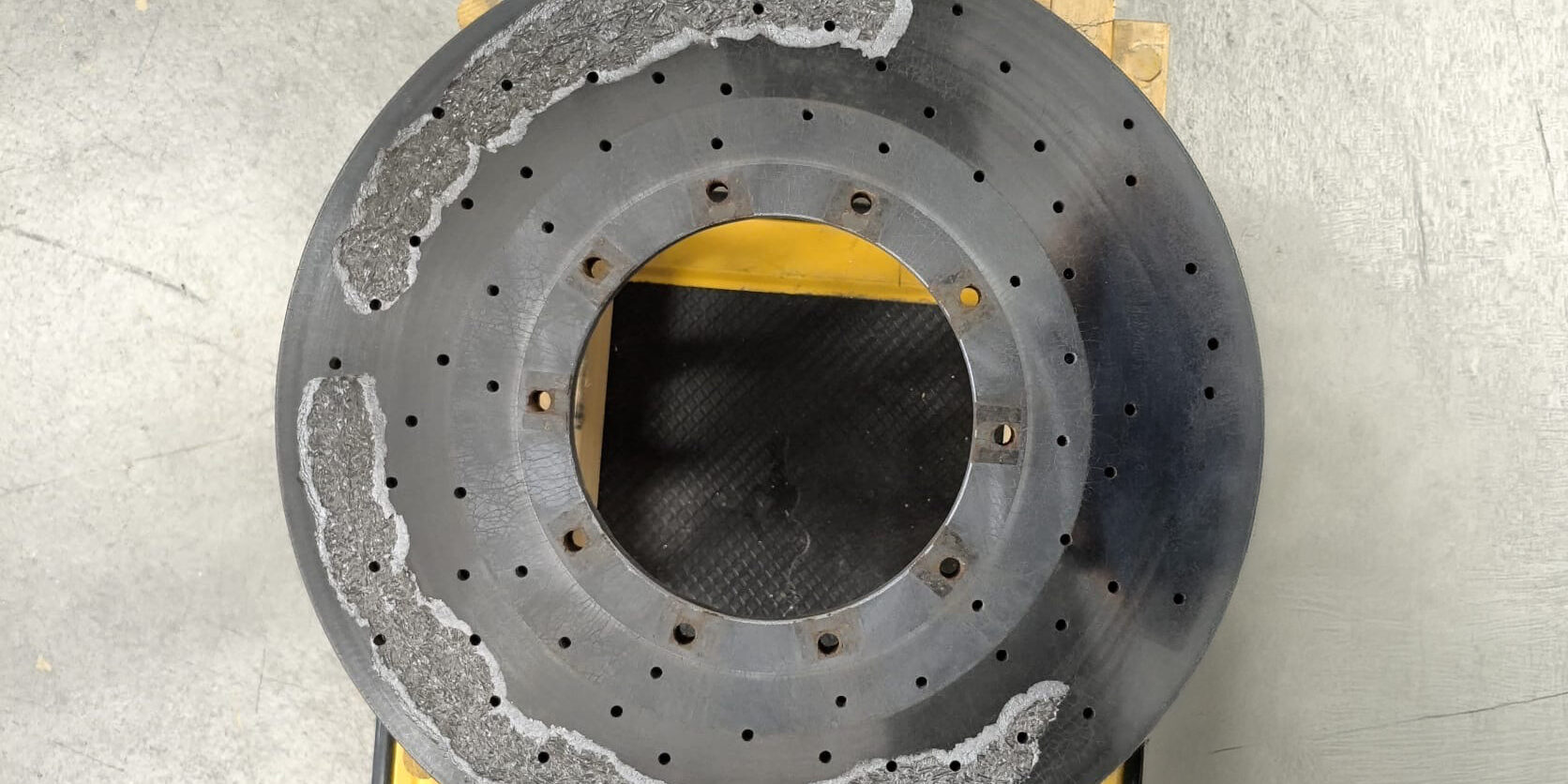
Delamination – When the friction layer on carbon-ceramic brake discs peels away
Delamination, also known as friction layer separation, is one of the most serious types of damage that can occur in carbon-ceramic brake discs. The problem: Delamination can occur suddenly and without any apparent warning—regardless of whether the brake disc has already been in use for many kilometers or still has relatively low mileage.
What happens during delamination?
Carbon-ceramic brake discs consist of a load-bearing base and a friction layer applied to it. Delamination results in a loss of adhesion between the friction layer and the underlying base material.
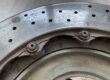
As a result, portions of the friction layer can suddenly and unpredictably peel away. The damage ranges from small, localized chips—which the driver may not even notice when braking—to large-scale peeling, which in extreme cases can affect more than 50% of the total friction surface.
The lack of predictability is particularly critical here: A brake disc that appears normal on the outside may already have a weakened bond between its material layers.
Why does delamination occur?
The main cause lies in the manufacturing process and, in particular, in the quality of the bond between the friction layer and the substrate.
Experience with affected brake discs suggests that the adhesion of this boundary layer is not reproduced uniformly on all discs.
There is also another physical effect: the different thermal expansion properties of the friction layer and the substrate material.
Braking generates high temperatures, especially during spirited driving or on the racetrack. The heating and subsequent cooling create mechanical stresses between the two layers of material.
These thermally induced stresses place additional strain on the bond and can further reduce an already weakened adhesion. In the worst-case scenario, this can ultimately lead to the sudden detachment of large areas of the friction layer.
Why is delamination particularly dangerous?
Unlike continuous, measurable wear, delamination often occurs without clear warning.
Smaller instances of detachment may initially go unnoticed. In contrast, major damage can significantly reduce the usable friction surface, alter braking behavior, and lead to vibrations or uneven braking performance.
The crucial point: Delamination is not ordinary wear, but a failure of the bond between two layers of material.
Rebrake – Specialist in the repair of friction layer delamination
Rebrake specializes in the refurbishment of damaged carbon ceramic brake discs. This includes the repair of friction layer delamination.
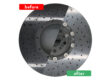
Through specialized processes, damaged friction surfaces can be restored and the bond between the friction layer and the substrate material can be rebuilt. Whether a brake disc is suitable for such refurbishment is assessed as part of an individual technical inspection.
Our goal is not to replace high-quality carbon ceramic brake discs prematurely, but to enable their continued use through professional refurbishment.
Rebrake – Carbon Ceramic Second Life.