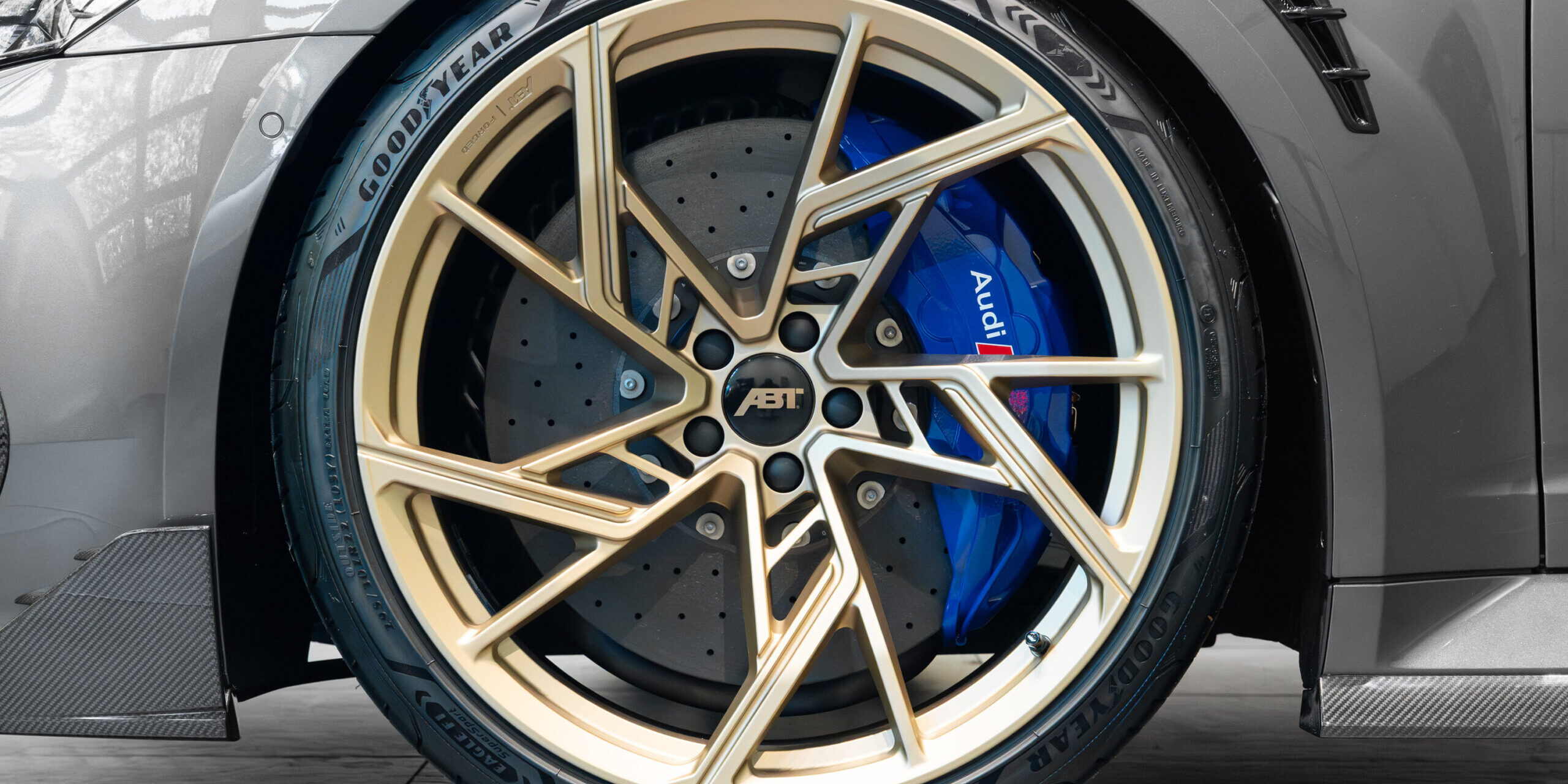
Audi RS6: Why Carbon-Ceramic Brake Rotors Are Particularly Prone to Wear and Damage
Enormous engine power, heavy vehicle weight, and extreme thermal stresses—the Audi RS6 places particularly high demands on its braking system. However, the carbon-ceramic brake rotors in various generations of the RS6 have several design- and material-related weaknesses.
High Stress Meets Older Ceramic Technology
The Audi RS6 is one of the most powerful vehicles in its class. The combination of high vehicle weight, enormous engine power, and correspondingly high braking forces poses particular challenges for the carbon-ceramic brake rotors.
One notable feature: Even the current Audi RS6 C8, with its large 440-mm brake rotors on the front axle, uses carbon-ceramic technology from an older generation.
Unlike more modern carbon-ceramic brake rotors, which feature an exceptionally hard, wear-resistant friction layer, the friction surface of these rotors still contains a higher proportion of exposed carbon. Under high thermal stress, this carbon can oxidize and cause unwanted roughness on the friction surface.
Abrasive Wear: When pits form in the friction surface
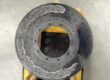
A typical type of damage seen on the carbon-ceramic brake rotors of the Audi RS6 is abrasive wear.
The combination of mechanical stress and thermal oxidation causes the friction surface to wear down unevenly. This results in indentations and pits that can grow larger over time.
The consequences are often:
- Uneven contact between the brake pads and the brake rotor
- Vibrations during braking, felt in the steering wheel or brake pedal
- Increasingly uneven braking performance
- Increased and irregular brake pad wear
Vibrations, in particular, are often initially attributed to warped brake rotors. In fact, however, the cause may lie in the unevenly worn friction surface.
Small craters—a typical sign of delamination
Another characteristic type of damage is small-area delamination.
In this process, small areas of the friction layer separate from the underlying substrate. Small, crater-like indentations form on the brake rotor surface.
What initially appears to be purely cosmetic damage can have significant consequences: The damaged areas interfere with uniform contact between the brake pad and the brake disc and negatively affect wear behavior.
In particular, this can significantly increase brake pad wear.
Audi RS6 C7 and C8: Large Brake Rotors, Similar Problems
The dimensions of the carbon-ceramic brake system vary depending on the RS6 generation:
Model Generation
Audi RS6 C6
Audi RS6 up to C7
Audi RS6 C8
Front Axle
420 mm
420 mm
440 mm
Rear Axle
356 mm
360 mm
360 mm
Although the front axle of the RS6 C8 is equipped with 440-mm carbon-ceramic brake rotors, this version is also based on older friction-layer technology. The known wear mechanisms may therefore still occur.
Particularly critical: Corroded fasteners
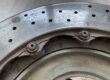
Older Audi RS6 models face an additional problem: corrosion on the fasteners between the brake rotor and the brake rotor housing.
These fasteners allow for the design-intended movement of the brake rotor relative to the housing. However, corrosion can cause these fasteners to seize.
As a result, thermal expansion is no longer adequately compensated for. This creates additional mechanical stresses in the ceramic material.
This is particularly critical on the rear axle, especially with older brake rotors that are approximately 356 mm in diameter.
In the worst-case scenario, cracks can form in the ceramic friction ring. Such structural cracks can make it impossible to safely repair the brake rotor, requiring it to be completely replaced.
Rebrake: Detect Damage Early and Perform Targeted Repairs
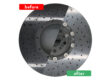
Not every damaged carbon-ceramic brake rotor needs to be replaced automatically.
Rebrake specializes in the inspection and repair of carbon-ceramic brake rotors. Depending on the nature of the damage and the technical condition, various measures may be considered:
- Abrasive wear: Inspection and, if necessary, restoration of a uniform friction surface
- Vibrations: Analysis of surface geometry and flatness
- Delamination: Assessment of the possibility of restoring damaged areas of the friction layer
- Corroded fasteners: Inspection and, if necessary, replacement of the affected components
A thorough technical inspection is always crucial. Especially in cases of cracks, advanced oxidation, or significant material loss, the safety of the brake rotor must be the top priority.
Our Conclusion
The carbon-ceramic brake rotors on the Audi RS6 are subjected to extreme stress due to the vehicle’s high performance, weight, and the friction layer technology used.
Denting, vibrations, small crater-like delaminations, and excessive brake pad wear are among the characteristic signs of damage. On older vehicles, the fasteners should also be checked regularly to prevent serious consequential damage.
Our tip: If you notice changes to the friction surface, unusually high pad wear, or vibrations when braking, you should have the carbon-ceramic brake rotors inspected by a professional as soon as possible.
Rebrake – Carbon Ceramic Second Life.
Are you having problems with the carbon-ceramic brake rotors on your Audi RS6? Contact us for a personalized technical assessment of your brake rotors.