Problem area on the safety component: Bolted connections on carbon-ceramic brake discs
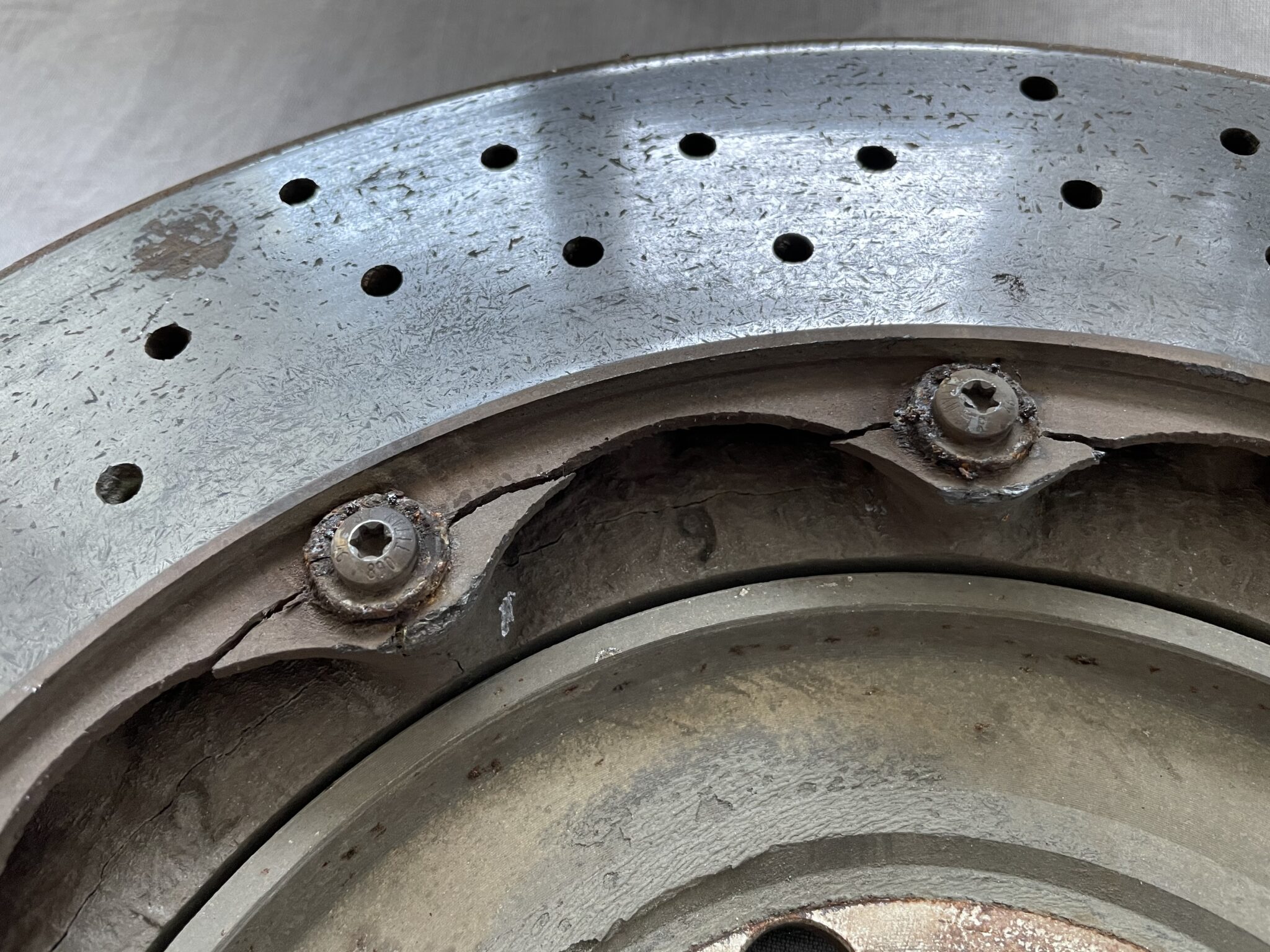
The carbon-ceramic brake disc was developed as a so-called “long-life” brake for vehicles. It is not uncommon for these brake discs to remain in service for more than 10 years, and in some cases even up to 24 years. The materials used in the disc itself—silicon carbide, silicon, and carbon—are extremely durable and do not rust—a key advantage of ceramic brakes.
The situation is different, however, when it comes to the fasteners that connect the metal wheel hub adapter—known as the “pot”—to the carbon-ceramic rotor. These metal fasteners are subjected to extreme stress caused by high temperatures and corrosion. Since the brake disc heats up to over 800 degrees Celsius during heavy braking and then cools down rapidly, the fasteners must be designed to accommodate this thermal expansion. For this reason, the brake disc is mounted in a floating arrangement within the housing to ensure this.
However, a problem arises when the metal sleeves—known as “floaters”—embedded in the ceramic material and responsible for transmitting braking torque become corroded. If this happens, their thermal expansion causes the brittle ceramic material to fracture, resulting in dangerous cracks. These cracks significantly compromise the strength of the brake disc and can have serious safety implications.
To minimize these risks, Rebrake offers a service to have carbon-ceramic brake discs professionally inspected. During this process, the caliper and rotor are disassembled, worn bolts are replaced with new ones, and corroded sleeves are derusted or replaced. This ensures that the component remains safe. Such an inspection is strongly recommended for brake rotors that are more than 10 years old—and for vehicles frequently exposed to road salt, it should be done even sooner.